

Eco-Friendly Custom Homes Perth: What Works in Our Climate
Planning an eco-friendly custom home in Perth? You’re in the right place. With our Mediterranean climate, we’ve significant advantages for sustainable building, but only if you understand how to utilise them effectively.
Building sustainably here isn’t about ticking green boxes or following generic eco-home checklists. It’s about understanding Perth’s unique conditions: how the Fremantle Doctor sea breeze patterns work, why western windows can destroy your energy efficiency, and how our sandy soils affect foundation choices that impact your home’s thermal performance.
We’ve been building custom homes across Perth’s diverse suburbs for years. Our design approach naturally incorporates energy-efficient principles through site-specific optimisation, cross-ventilation planning, and natural light maximisation. When you build specifically for your site and Perth’s climate, you get measurably better insulation performance, strategic natural light capture, and ventilation systems that reduce electrical cooling needs by up to 40%.
Whether this is your first build with a custom builder or you’re upgrading with sustainability as a priority, here’s what works in Perth’s unique conditions.
Understanding Eco-Friendly Custom Homes in Perth’s Context
An eco-friendly custom home in Perth leverages our climate advantages while addressing specific local challenges. According to the Bureau of Meteorology, Perth receives 3,200+ annual sunshine hours and consistent afternoon sea breezes, creating opportunities that don’t exist in other Australian climates.
Custom homes built specifically for Perth conditions perform significantly better than production homes. The ability to optimise orientation, insulation placement, and natural ventilation for your exact site conditions typically results in 30-50% better energy performance than minimum building standards.
What This Means for Your Custom Home Design
When planning your eco-friendly custom home, think beyond just adding green features. Your design should work with Perth’s climate from the ground up. This means positioning your main living areas to capture winter sun while avoiding harsh western summer heat. Plan your outdoor entertaining spaces to take advantage of those cooling afternoon breezes. Design your roof lines and eaves to provide natural shading during our intense summer months.
The result? Energy cost reductions of 30-50% compared to code-minimum homes are achievable through proper design. The CSIRO reports that well-designed homes in Perth’s climate can maintain indoor temperature stability within 2-3°C year-round without mechanical systems. This translates to significantly lower power bills and year-round comfort without constantly adjusting your thermostat.
Water consumption reductions of 40-60% through integrated harvesting and efficiency systems are typical for sustainable custom homes. The Department of Water and Environmental Regulation notes that Perth homes using integrated water management systems significantly outperform standard construction. For your family, this means substantially lower water bills and the security of having backup water sources during Perth’s dry summers.
According to realestate.com.au market analysis, sustainable homes command property value premiums of 8-12% in Perth’s current market, with energy-efficient features becoming increasingly important to buyers. When you eventually sell, your investment in sustainability will likely provide a substantial return while making your home more attractive to environmentally conscious buyers.
The key difference is integration from day one rather than retrofitting, which typically costs 3-4 times more and achieves inferior performance.
Perth’s Climate Advantages for Sustainable Design
Perth’s climate provides specific opportunities that smart custom design can exploit for energy efficiency and comfort.
Solar Access Optimisation
According to the Bureau of Meteorology, Perth receives 8.8 hours of daily sunshine on average, with consistent solar angles that make passive solar design predictable and effective. Understanding seasonal sun paths is crucial for sustainable design.
Winter Solar Strategy for Your Home
December-February sun angles of 78° maximum allow for deep eave overhangs (typically 1.2-1.5m) that block summer heat while permitting winter warmth. The Australian Building Codes Board recommends north-facing windows comprise 60-70% of total glazing for optimal passive heating in Perth’s climate zone.
What this means for your design: Position your main living areas – kitchen, dining, and family rooms – facing north to capture maximum winter sun. Install deep eaves or pergolas that shade these windows in summer but allow the lower winter sun to stream in. This simple orientation choice can reduce your heating bills by 40-60% during Perth’s mild winter months while keeping your home naturally cool in summer.
Summer Shading Requirements That Work
Perth’s UV levels often reach 11-12+ in summer, according to the Cancer Council Australia. External shading devices or strategic landscaping can reduce heat gain by up to 80% compared to unprotected glass, according to the Australian Window Association.
For your custom home, this means avoiding large west-facing windows wherever possible. If western windows are necessary for views or cross-ventilation, invest in external shutters, pergolas with climbing plants, or automated external blinds. These solutions cost $2,000-5,000 per major window but can save $300-500 annually in cooling costs while dramatically improving comfort.
Well-designed homes with proper solar orientation demonstrate how floor-to-ceiling windows positioned on northern and eastern faces can capture maximum winter light while substantial eaves and external blinds prevent summer overheating. This orientation strategy can reduce artificial lighting needs significantly during daylight hours, translating to $200-400 annual electricity savings.
Natural Ventilation That Actually Works
Perth’s afternoon sea breeze provides reliable cooling from October through April, according to the Bureau of Meteorology. Peak breeze strength typically occurs between 1-4pm, coinciding with maximum daily temperatures.
Designing Your Home to Capture Cooling Breezes
Effective design requires understanding prevailing wind direction (predominantly southwest in summer) and creating pressure differentials that draw air through living spaces. The Australian Institute of Architects recommends inlet openings should be 20-30% smaller than outlet openings to accelerate air movement.
For your custom home design, position your main living areas to capture these afternoon breezes. Create a clear airflow path from southwest-facing openings through to northeast-facing outlets. Use high-level windows or clerestory windows on the outlet side to draw hot air up and out. This natural ventilation system can reduce your reliance on air conditioning by 60-70% during shoulder seasons, saving $800-1,200 annually on cooling costs.
Homes designed with living areas positioned to capture southwest breezes through wall-height sliding doors, combined with strategically placed high-level windows on the opposite side, can create natural air movement that reduces indoor temperatures by 4-6°C during peak summer afternoons. Homeowners in such designs often report rarely using air conditioning before 3pm, even on days reaching 35°C+.
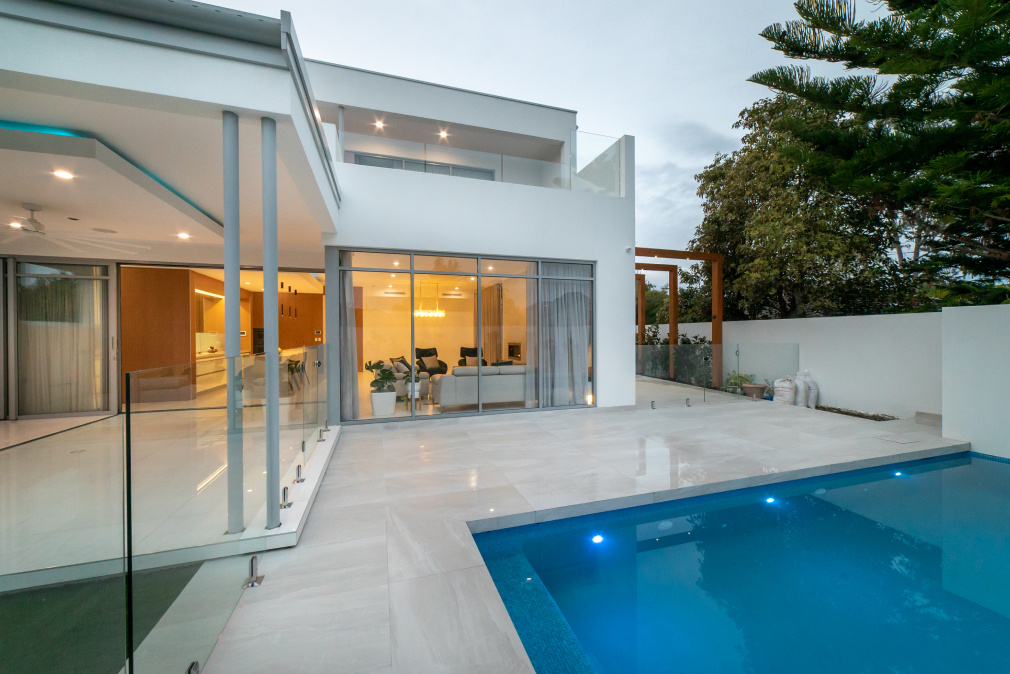
Planning Cross-Ventilation for Maximum Comfort
According to the National Construction Code, effective natural ventilation requires openings totalling at least 10% of the floor area, positioned to create diagonal airflow across the main living spaces. This typically eliminates air conditioning needs for 6-7 months annually in Perth.
When designing your floor plan, ensure every main living space has openings on at least two sides, preferably positioned diagonally across the room. Avoid long, narrow rooms with openings only at one end – these create dead air zones. Instead, plan open-plan living areas with strategic partial walls that guide airflow while maintaining sight lines and family connection.
Site-Specific Sustainable Strategies
Perth’s diverse geology and microclimates require different approaches across suburbs. Understanding your specific site conditions determines which sustainable strategies will be most effective.
Coastal vs Inland Design Considerations
Coastal Areas: Embracing Salt Air and Humidity
Coastal areas from Fremantle to Joondalup experience higher humidity and salt exposure, requiring different material choices and ventilation strategies. The Department of Planning reports that coastal sites benefit more from thermal mass for temperature stability but need corrosion-resistant fixtures and fittings.
What this means for your coastal custom home: Embrace the humidity by designing for enhanced natural ventilation rather than fighting it with air conditioning. Use thermal mass materials like concrete floors, stone feature walls, or brick internal walls to moderate daily temperature swings. These materials absorb heat during the day and release it slowly at night, maintaining comfortable temperatures with minimal energy input.

Choose marine-grade fixtures, stainless steel or powder-coated aluminium window frames, and galvanised steel roofing. While these materials cost 10-15% more initially, they’ll save thousands in maintenance and replacement costs over your home’s lifetime. Plan for larger roof overhangs and covered outdoor areas to protect against salt-laden winds while creating comfortable outdoor living spaces year-round.
Inland Areas: Managing Temperature Extremes
Perth’s Hills and eastern suburbs experience greater temperature extremes and lower humidity, favouring different insulation strategies and water conservation approaches according to CSIRO climate data. These sites often have better solar access but may need more substantial thermal mass.
For your inland custom home, this means planning for larger daily temperature swings – potentially 15-20°C between day and night temperatures. Design your home with substantial thermal mass in the right locations: concrete floors in north-facing living areas to store winter sun, thick masonry walls in bedrooms to moderate overnight temperatures.

Invest in higher-grade insulation than coastal areas require. While coastal homes might achieve comfort with R2.5 wall insulation, inland homes benefit from R3.5-4.0 insulation systems. This extra $3,000-5,000 investment typically saves $400-600 annually in heating and cooling costs while dramatically improving comfort during temperature extremes.
Plan for more substantial water storage – 40,000-60,000 litres versus 20,000-30,000 litres for coastal areas. Inland areas receive similar rainfall but experience higher evaporation rates and may face longer dry periods between winter rains.
Perth Metro: Combating Urban Heat
Urban heat island effects in central areas can increase cooling loads by 15-20% according to Curtin University research. Strategic landscaping and light-coloured roofing become more critical for energy performance in these locations.
For metro custom homes, focus on creating your own microclimate through strategic landscaping and material choices. Plant deciduous trees on western boundaries to provide summer shade while allowing winter sun. Choose light-coloured roofing materials that reflect rather than absorb heat – this single choice can reduce cooling costs by $200-400 annually.

Design generous covered outdoor areas and use water features or misting systems to create cooling through evaporation. Consider green roofs or living walls that provide insulation while reducing the overall heat island effect in your neighbourhood.
Material Selection for Perth’s Harsh Conditions
Perth’s intense UV radiation, salt-laden coastal air, and temperature extremes demand materials that maintain performance and appearance while supporting sustainability goals.
Locally Sourced Timber: Performance and Value
Western Australian hardwoods offer exceptional durability in Perth conditions. According to the Forest Products Commission, Jarrah (density 800-850 kg/m³) and Karri (density 900-950 kg/m³) provide natural termite resistance and UV stability that reduces maintenance requirements over 20-30 year lifespans.
Why Local Timber Makes Financial Sense
Jarrah’s thermal conductivity (0.14 W/mK) provides better insulation than many imported hardwoods while supporting local forestry, according to Murdoch University research. Proper seasoning and treatment ensure dimensional stability in Perth’s variable humidity.
For your custom home, choosing WA hardwoods means selecting materials that have evolved to thrive in our exact climate conditions. Jarrah decking, for example, requires no chemical treatment yet maintains its appearance for 15-20 years with minimal maintenance. Compare this to treated pine that needs re-treatment every 2-3 years at $3,000-5,000 per application.
According to Master Builders WA, local hardwoods typically cost 15-25% more initially but require 60-80% less maintenance than imported alternatives over their lifecycle. Projects using warm timber accents demonstrate how these materials age gracefully, developing character without constant refinishing.
When specifying timber for your home, budget an extra $8,000-15,000 for quality local hardwoods over imported alternatives. This investment typically saves $2,000-3,000 in maintenance costs every 5-7 years while providing superior performance and supporting local industry.
High-Performance Exterior Systems That Last
Render and Cladding Selection
Modern acrylic renders with UV-stable pigments maintain appearance for 15-20 years in Perth conditions, according to Cement Concrete & Aggregates Australia. Quality render finishes demonstrate materials that handle thermal cycling without cracking or fading.
For your custom home, invest in premium render systems with UV-stable pigments and flexible acrylic binders. While standard renders cost $40-60 per square metre, premium systems at $80-120 per square metre provide 50% longer service life and maintain appearance without repainting. This translates to $15,000-25,000 savings over 20 years for a typical custom home.
Metal Cladding That Performs
According to BlueScope Steel, Colorbond steel with Thermatech technology reflects up to 70% of heat compared to standard finishes. Installation over appropriate insulation creates cavity systems that reduce heat transfer by 40-50%.
When selecting metal cladding, specify Thermatech or equivalent reflective finishes for west and north-facing walls. The $3,000-5,000 premium for reflective finishes typically saves $300-500 annually in cooling costs while dramatically improving comfort in rooms behind these walls.

Stone and Masonry for Thermal Performance
Local limestone and imported granite provide thermal mass while requiring minimal maintenance. The Building Commission reports that properly detailed stone work can last 50+ years without significant deterioration in Perth’s climate.
For thermal mass benefits, incorporate stone or masonry walls where they’ll be exposed to winter sun, typically north-facing internal walls or feature walls. A 200mm thick limestone or rammed earth wall can store 3-4 hours of heating or cooling, reducing temperature swings and energy consumption by 20-30%.
Innovation in Sustainable Materials
Recycled Content Options That Work
Reconstituted stone products containing 85-95% recycled content perform comparably to natural stone while reducing quarrying impact according to the Green Building Council of Australia. These materials often cost 10-20% less than equivalent natural products.
For your custom home, consider reconstituted stone for areas requiring durability without premium aesthetics – retaining walls, pool surrounds, or utility areas. Reserve natural stone for high-impact areas where appearance is paramount. This strategy can save $5,000-10,000 while maintaining sustainability goals.
Bio-based Insulation Benefits
According to CHOICE, sheep’s wool insulation provides excellent thermal performance (R-value 3.5-4.0 per 100mm) while naturally regulating humidity. Installation costs are comparable to synthetic alternatives but offer superior indoor air quality benefits.
Sheep’s wool insulation costs $2-3 per square metre more than synthetic alternatives, but provides natural humidity regulation that can eliminate condensation problems common in Perth homes. For families with allergies or chemical sensitivities, this investment in healthier indoor air quality provides benefits far beyond energy savings.
Advanced Energy Efficiency Strategies
Perth’s new 7-star NatHERS requirements represent minimum performance standards according to the Australian Building Codes Board. Well-designed custom homes can achieve 8-10 star ratings through strategic upgrades that often pay for themselves within 5-8 years.
Insulation System Design That Works
Wall Assembly Optimisation
Achieving high thermal performance requires addressing thermal bridging. According to the Australian Institute of Architects, steel frame construction with external continuous insulation can achieve effective R-values of 4.0-5.0, compared to 2.5-3.0 for standard construction.
For your custom home, specify continuous external insulation to eliminate thermal bridging through wall frames. This typically adds $8,000-12,000 to construction costs but can reduce heating and cooling costs by 25-35%, providing payback within 6-8 years. The improved comfort from eliminating cold spots and drafts provides immediate benefits that homeowners notice daily.
Roof Insulation That Pays
Perth’s intense summer heat makes roof insulation critical. According to the CSIRO, bulk insulation (R4.0-6.0) combined with reflective foil creates systems that can reduce cooling loads by 35-45%. High ceilings in well-designed homes accommodate thicker insulation while creating thermal buffer zones.
Plan your roof space to accommodate R6.0 insulation plus reflective barriers. This typically requires 250-300mm clearance and costs $3,000-5,000 more than minimum standards. However, this investment can reduce cooling costs by $600-900 annually in Perth’s climate while eliminating the “drumming” noise of rain on metal roofs.
Concrete Slab Strategies
According to the Concrete Institute of Australia, perimeter insulation around concrete slabs prevents thermal bridging that can account for 20-30% of total building heat loss. Proper detailing adds minimal cost but significantly improves comfort and efficiency.
For slab-on-ground construction, specify perimeter insulation extending 600mm down and 600mm under the slab. This $2,000-3,000 upgrade eliminates cold floors in winter and reduces heating costs by 15-20% while improving comfort throughout the home.
Advanced Glazing Solutions
Double Glazing Investment Analysis
According to the Australian Window Association, double glazing in Perth’s climate reduces heat transfer by 40-50% compared to single glazing. Low-E coatings can further reduce heat gain by 30-40% while maintaining natural light transmission.
Double glazing typically adds $8,000-15,000 to custom home costs but reduces energy bills by $800-1,500 annually, according to CHOICE. More importantly, double glazing eliminates condensation problems, reduces external noise by 50-70%, and improves security. For homes near busy roads or flight paths, these benefits often justify the investment beyond energy savings alone.
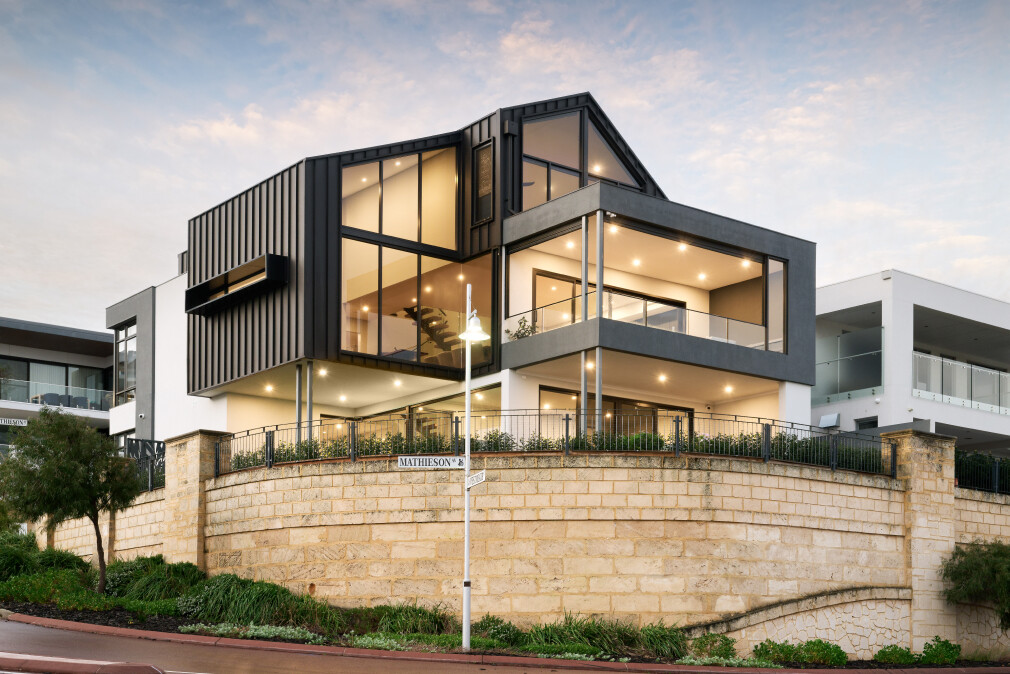
The Mathieson Avenue block impresses all who pass by with an external design that leaves you in awe.
Strategic Window Planning
According to the National Construction Code, strategic window sizing can maintain natural light while controlling heat gain. South-facing windows can be larger (up to 25% of wall area) while west-facing glazing should be limited to 10-15% of wall area for optimal thermal performance.
When planning your custom home, resist the temptation to install large windows on all orientations. Instead, concentrate glazing on the north and east faces where solar heat gain is beneficial. Use smaller, strategically placed windows on south and west faces, supplemented by skylights or clerestory windows for natural light without heat gain.

For rooms requiring western windows for views, plan for external shading that can reduce heat gain by 60-80%. Automated external blinds cost $2,000-4,000 per large window but provide both energy savings and convenience while protecting furniture from UV damage.
Smart Home Energy Management
Automated Systems That Save Money
According to the Smart Energy Council, smart thermostats with occupancy sensing and weather prediction can reduce energy consumption by 15-25% compared to manual operation. Integration with solar systems enables load shifting that maximises renewable energy use.
For your custom home, invest in smart climate control that learns your family’s patterns and adjusts automatically. Quality systems cost $3,000-6,000 but typically save $400-800 annually while improving comfort. Look for systems that integrate with solar panels to automatically pre-cool your home using solar energy before peak tariff periods.
Zoned Climate Control Benefits
Individual room control allows heating and cooling only occupied spaces. According to the Air Conditioning and Mechanical Contractors’ Association, in large custom homes, this can reduce energy consumption by 25-35% compared to whole-house systems.
Plan ducted systems with individual zone controls for bedrooms, living areas, and home offices. This allows parents to maintain comfortable sleeping temperatures without cooling unused guest rooms, or cool home offices during work hours without affecting the entire house. The additional $4,000-8,000 for zoned systems typically saves $600-1,000 annually in energy costs.
Energy Monitoring for Optimisation
The Clean Energy Council reports that homes with real-time energy monitoring typically use 10-15% less energy due to increased awareness of consumption patterns.
Install comprehensive energy monitoring that shows real-time usage by circuit and appliance. Modern systems cost $1,000-2,000 but help families understand which appliances and habits drive energy consumption. This awareness typically leads to behavioural changes that reduce bills by $200-400 annually while extending appliance life through better usage patterns.
Water Management Systems for Perth
Perth’s Mediterranean climate with wet winters and dry summers requires integrated water management that captures, stores, and conserves water efficiently.
Rainwater Harvesting Design
System Sizing for Perth Conditions
According to the Bureau of Meteorology, Perth’s average 730mm annual rainfall can generate 20,000-40,000 litres annually from typical custom home roof areas (200-400m²). Proper tank sizing requires analysis of rainfall patterns and intended usage.
For your custom home, calculate tank size based on roof catchment area and intended usage. A 250m² roof generates approximately 180,000 litres annually, but Perth’s seasonal rainfall means 4-6 months of dry periods. Size your tank for 3-4 months storage for toilet flushing and laundry – typically 15,000-25,000 litres for a family of four.
Larger tanks provide diminishing returns unless you’re planning extensive irrigation or pool filling. A 20,000-litre tank might cost $8,000 installed, while a 40,000-litre tank costs $14,000. The extra capacity only provides value if you can use the additional water during Perth’s wet winter months.
Storage Strategies That Work
Underground tanks maximise space utilisation while reducing evaporation. According to the Tank Industry Association, concrete tanks (lifespan 30+ years) cost more initially but offer better long-term value than plastic alternatives (lifespan 15-20 years).
Plan underground concrete tanks during foundation design to minimise installation costs. Underground installation costs $2,000-4,000 more than above-ground but saves valuable landscape space while keeping water 5-10°C cooler. This cooler water is better for plants and reduces algae growth.
Position tanks to enable gravity feeding to toilets and laundry areas, eliminating pump energy consumption. This requires careful planning during design but can save $100-200 annually in pump operating costs while improving system reliability.
Distribution Systems for Maximum Benefit
Automated switching between rainwater and mains supply ensures continuous water availability while maximising rainwater usage. According to the Department of Water and Environmental Regulation, these systems can supply 60-80% of non-potable water needs in Perth homes.
Install smart controllers that prioritise rainwater use while automatically switching to mains supply when tanks are low. Quality systems cost $1,500-3,000 but maximise water savings while providing convenience and system protection. Include water level monitoring accessible via smartphone to track usage patterns and system performance.
Resort-style outdoor areas could incorporate rainwater systems supplying pool top-up, water features, and irrigation. A 50,000-litre underground tank could supply most non-potable water needs while remaining invisible within the landscape design.

Greywater System Integration
Treatment and Reuse Options
Simple greywater systems can reuse water from showers, basins, and laundry for irrigation. According to the Department of Health WA, more sophisticated treatment enables wider reuse applications while maintaining health standards.
For your custom home, start with simple greywater diversion from bathroom basins and showers to garden irrigation. This requires minimal treatment and costs $2,000-4,000 to install. Avoid kitchen and toilet waste, which requires more complex treatment. Simple systems can supply 40-60% of garden irrigation needs while reducing both water and wastewater bills.
Plant Selection for Greywater
Perth’s native plants are naturally adapted to variable water quality and seasonal availability, according to Kings Park Botanic Garden. Banksia, grevillea, and callistemon species thrive with greywater irrigation while supporting local biodiversity.
Design garden areas specifically for greywater irrigation using plants that tolerate soap residues and variable nutrient levels. Native plants are ideal, but many fruit trees and herbs also perform well with greywater. Avoid vegetables that will be eaten raw – stick to fruit trees, herbs, and ornamental plants.
Incorporate subsurface irrigation to prevent surface ponding and eliminate any health concerns. Mulched garden beds with drip irrigation lines 100-150mm below the surface provide excellent greywater application while maintaining attractive landscapes.
System Costs and Benefits
According to the Water Corporation, greywater systems typically cost $3,000-8,000 installed but can reduce water bills by $400-800 annually. In water-restricted areas, they also provide irrigation security during restrictions.
Calculate greywater benefits based on your family’s water usage and garden size. A family of four generates 200-300 litres of greywater daily – enough to maintain 100-150m² of garden area without scheme water. During Perth’s summer water restrictions, this independence provides significant value beyond dollar savings.
Water-Efficient Fixture Selection
Performance Standards That Matter
WELS (Water Efficiency Labelling and Standards) ratings help identify high-performance fixtures. According to the Australian Government Department of Industry, 6-star toilets use 3 litres compared to 9+ litres for older models. High-efficiency showerheads maintain pressure while reducing flow from 15-20 litres/minute to 6-9 litres/minute.
For your custom home, specify 6-star toilets throughout (typically $200-400 more per toilet) and high-efficiency showerheads for all bathrooms. A family of four can save 40,000-60,000 litres annually with these fixtures, equivalent to $200-400 in water and wastewater charges while reducing hot water heating costs.
Install flow restrictors on basin taps and consider sensor-activated taps in powder rooms and children’s bathrooms. These prevent taps from being left running and can save 10-20% of total household water consumption.
Cost-Effectiveness Analysis
Water-efficient fixtures typically add $1,000-3,000 to build costs but reduce water bills by $200-400 annually, according to CHOICE. Combined with lower wastewater charges and reduced hot water heating costs, payback periods are typically 3-5 years.
Beyond financial savings, water-efficient fixtures provide convenience and reliability. Dual-flush toilets give users control over water usage, while efficient showerheads often provide better shower experiences through improved pressure and spray patterns.
Indoor Environmental Quality
Sustainable homes should enhance occupant health and comfort through material selection, ventilation design, and natural lighting strategies.
Material Health Considerations
Volatile Organic Compound Management
Low-VOC paints, adhesives, and finishes reduce indoor air pollution according to the Australian Building Codes Board. Natural materials like solid timber, stone, and ceramic tiles avoid off-gassing while providing durability and aesthetic appeal.
For your custom home, specify zero or low-VOC paints, adhesives, and sealants throughout. While these products cost 10-20% more, they eliminate the “new home smell” that indicates harmful chemical off-gassing. This is particularly important for family members with allergies, asthma, or chemical sensitivities.
Choose solid timber flooring over engineered products where possible, and ceramic tiles over vinyl or carpet in wet areas. These natural materials don’t off-gas chemicals and improve indoor air quality over time through natural humidity regulation.
Formaldehyde-Free Construction
According to CHOICE, engineered timber products with formaldehyde-free adhesives prevent long-term indoor air quality issues. These products often cost 10-20% more but provide health benefits that justify the investment.
Specify formaldehyde-free plywood, MDF, and particleboard throughout your home. This includes cabinetry, built-in furniture, and structural elements. While the premium is typically $2,000-4,000 for a custom home, the health benefits are particularly valuable for children’s bedrooms and play areas.
Natural Material Benefits
Natural stone and timber finishes aren’t just aesthetically pleasing; they contribute to healthier indoor environments through humidity regulation and air purification, according to CSIRO research.
Natural materials like limestone, timber, and wool actually improve indoor air quality by absorbing excess humidity and releasing it when air becomes dry. Plan these materials inthe main living areas where families spend most time. A limestone feature wall or solid timber ceiling can significantly improve comfort while providing beautiful natural textures.

Advanced Ventilation Strategies
Natural Ventilation Design
Effective cross-ventilation requires understanding pressure differentials and air movement patterns. According to the Australian Institute of Architects, openings should be positioned to create diagonal airflow across living spaces, with inlet areas 20-30% smaller than outlets to accelerate air movement.
For your custom home, plan every room with openings on at least two walls, preferably positioned diagonally. This creates natural air movement that maintains fresh indoor air without mechanical systems. In bedrooms, position one opening low (door undercuts or low windows) and one high (highlight windows) to create stack ventilation that works even without wind.
Use internal doors with undercuts or highlight windows to allow air movement between rooms while maintaining privacy. Open-plan designs naturally promote air movement, but strategic partial walls can guide airflow while defining spaces.
Mechanical Ventilation Integration
Heat recovery ventilation (HRV) systems can maintain indoor air quality during extreme weather when natural ventilation isn’t practical. According to the Air Conditioning and Mechanical Contractors’ Association, these systems exchange stale indoor air with fresh outdoor air while retaining thermal energy.
For Perth’s mild climate, simple exhaust ventilation is often more cost-effective than complex HRV systems. Install quiet, efficient exhaust fans in bathrooms, laundry, and kitchen areas with timer controls to remove moisture and odours automatically. This prevents humidity problems while maintaining indoor air quality during closed-house periods.
Air Quality Monitoring
Indoor air quality sensors can adjust ventilation rates based on CO2 levels, humidity, and pollutant detection. According to the CSIRO, this optimises air quality while minimising energy consumption.
Consider smart home integration that automatically opens windows or activates ventilation when indoor CO2 levels rise or when outdoor air quality is suitable. These systems cost $2,000-4,000 but provide both health benefits and energy savings by optimising fresh air intake.
Wall-height sliding doors in well-designed homes create natural air circulation that refreshes the house without mechanical systems. During mild weather, this natural ventilation can maintain comfortable conditions while using zero energy for air movement.
Integration of Luxury and Sustainability
Modern sustainable design enhances rather than compromises luxury living experiences. The key is selecting high-performance materials and systems that deliver superior comfort and convenience.
Premium Sustainable Material Selection
Reclaimed Timber Character
Salvaged hardwoods offer unique grain patterns and character impossible to achieve with new materials. According to the Australian Institute of Architects, proper restoration and finishing can create stunning features like live-edge detailing while supporting circular economy principles.
For your luxury custom home, consider reclaimed timber for statement pieces – kitchen islands, feature walls, or ceiling beams. While reclaimed timber costs 20-40% more than new materials, each piece tells a story and provides character that new timber can’t match. Properly restored heritage timber can last another 50-100 years while adding unique beauty to your home.
Source reclaimed timber from heritage building demolitions, old wharves, or railway bridges. Each piece has a unique character from its previous life, while reducing demand for new timber harvesting. Work with specialised suppliers who can guarantee structural integrity and provide documentation of timber history.
High-Performance Stone Applications
Natural stone provides thermal mass that stabilises indoor temperatures while offering luxury aesthetics. According to the Stone Institute, local granite and limestone reduce transport energy while providing durability that can last centuries.
Incorporate thermal mass stone strategically in north-facing walls that receive winter sun. A limestone or granite feature wall stores solar heat during the day and releases it gradually at night, reducing heating costs while creating a stunning focal point. These installations cost $200-400 per square metre but provide both aesthetic and performance benefits for decades.
Choose local stone when possible – WA limestone and granite perform excellently in Perth’s climate while supporting local quarries. Import exotic stones only for small accent areas where their unique characteristics justify the environmental cost of transport.
Advanced Glazing Technologies
High-performance glass with smart tinting capabilities can adjust light transmission and heat gain throughout the day. According to the Australian Window Association, these systems provide superior comfort while maintaining unobstructed views.
For luxury applications, consider electrochromic glass that changes from clear to tinted automatically based on sun angle and intensity. While these systems cost $500-800 per square metre premium over standard glazing, they eliminate the need for blinds or curtains while providing optimal comfort and views.
Smart glass is particularly valuable for west-facing windows in master bedrooms or home offices, where afternoon sun can create glare and overheating. The ability to maintain views while controlling heat and light provides a luxury that traditional window treatments can’t match.
Smart Technology Integration
Automated Climate Optimisation
According to the Smart Energy Council, smart home systems can learn occupancy patterns and weather forecasts to optimise heating, cooling, and ventilation while reducing energy consumption by 20-30%.
For your luxury custom home, invest in whole-home automation that coordinates heating, cooling, lighting, and window treatments based on occupancy, weather conditions, and energy costs. Premium systems cost $15,000-25,000 but provide convenience that transforms daily living while optimising energy performance.
These systems can pre-cool your home using off-peak electricity or solar power before afternoon heat peaks, automatically adjust window treatments to optimise natural light and privacy, and coordinate with your solar battery system to minimise grid energy consumption. The result is effortless comfort that adapts to your lifestyle while minimising environmental impact.
Lighting System Intelligence
Circadian lighting systems that adjust colour temperature throughout the day can improve sleep quality and wellbeing according to Lighting Council Australia, while minimising energy use through LED efficiency and automated controls.
Plan lighting systems that automatically shift from cool, energising light in the morning to warm, relaxing tones in the evening. This supports natural sleep cycles while providing dramatic ambience control for entertaining. Quality circadian lighting systems add $5,000-10,000 to electrical costs but provide wellness benefits that luxury homeowners increasingly value.

Integrate automated lighting with smart glass and motorised window treatments to create scenes that optimise comfort and ambience throughout the day. “Entertaining mode” might dim internal lights while illuminating landscape features, while “work mode” maximises natural light supplemented by bright task lighting.
Integrated Home Management
Whole-home automation systems can coordinate energy management, security, and comfort systems to optimise performance while providing convenient control through smartphone interfaces according to the Custom Electronic Design & Installation Association.
For comprehensive luxury integration, plan systems that learn your family’s patterns and automatically adjust settings for comfort and efficiency. Smart systems can detect when you’re driving home and pre-condition the house, adjust lighting based on sunset times and occupancy, and coordinate with security systems to maintain appropriate lighting when you’re away.
Quality whole-home systems cost $20,000-40,000 but provide convenience and peace of mind that enhance luxury living while optimising energy performance. Look for systems that integrate with renewable energy, electric vehicle charging, and water management for comprehensive sustainability control.
Financial Analysis and Investment Planning
Understanding the complete financial picture of sustainable features helps make informed investment decisions that balance upfront costs with long-term benefits.
Detailed Cost Breakdown
High-Impact Investments
According to Master Builders WA, whole-home insulation and air sealing upgrades typically cost $4,000-12,000, depending on house size and specification. Energy bill savings from proper insulation vary significantly based on existing home performance and usage patterns.
Double glazing replacement for all windows generally ranges from $10,000-25,000 for a standard family home in WA, according to the Australian Window Association, with most projects at the $12,000-20,000 mark. Typical energy bill savings from double glazing range from 10-20% annually, translating to $300-900 for most households spending $3,000-4,500 on power, according to SolarQuotes Australia. The payback period is often 10-20 years, unless in homes with very high energy use.
When budgeting your sustainable custom home, prioritise investments with the best comfort improvement and reasonable payback periods. Enhanced insulation provides immediate comfort benefits, making it a priority investment. Double glazing offers significant comfort, noise reduction, and energy savings, but requires careful financial planning due to longer payback periods.
Calculate investments based on your family’s actual energy usage and comfort priorities. Homes with high energy consumption see faster payback from efficiency upgrades, while the comfort and noise benefits often justify investments beyond pure financial returns.
Solar System Sizing
Perth’s excellent solar conditions make photovoltaic systems highly cost-effective. According to SolarQuotes Australia, a 6.6kW system costs $5,000-10,000 after rebates for quality components in mid-2025, with $8,000-12,000 representing higher-end systems including top-tier inverters and battery-ready features.

For custom homes with pools, home offices, or electric vehicle charging, plan for larger solar systems. A 10kW system costs $9,000-15,000 after rebates for standard residential setups, according to the Clean Energy Regulator, with $12,000-18,000 applying to premium panels or complex roof installations.
Most homes offset 60-90% of electricity bills with 6.6-10kW solar systems, with complete bill elimination requiring high daytime usage and minimal evening loads. Annual feed-in income of $800-1,200 is realistic for a 10kW system at current WA tariffs, though this varies with self-consumption rates and tariff changes.
Size your solar system based on a comprehensive energy analysis, including pool equipment, electric vehicle charging, and heating/cooling loads. Battery storage ($8,000-15,000) can maximise solar self-consumption and provide backup power during outages.
Water System Investments
According to the Tank Industry Association, full rainwater tank systems for household supply typically cost $8,000-16,000 installed, including plumbing in Perth. Greywater system installation ranges from $3,000-7,000 for diversion systems to $6,000-12,000 for treat-and-reuse systems, depending on compliance requirements and garden size.
Plan integrated water systems that combine rainwater harvesting, greywater recycling, and efficient fixtures for optimal water independence. For homes using tanks and greywater for all garden irrigation and some internal uses, 30-50% water bill reduction is achievable according to the Water Corporation WA, with 60% reduction possible but uncommon due to mains water requirements for potable needs.
Consider the value of water security beyond financial savings. During Perth’s dry summers or extended drought periods, homes with comprehensive water management systems maintain gardens and lifestyle amenities that purely grid-dependent homes cannot.
Government Incentives and Rebates
Federal Renewable Energy Support
The Small-scale Renewable Energy Scheme provides rebates that reduce solar installation costs by 25-35% according to the Clean Energy Regulator, making solar systems financially attractive with reasonable payback periods.
When planning your custom home, coordinate solar installation with construction to maximise rebates and ensure optimal system design. Installing solar during construction typically costs 15-20% less than retrofitting while enabling better integration with home design and electrical systems.
Current battery rebate programs in WA have ended, though new programs may become available. Research current incentives during your planning phase, as programs change regularly.
State and Local Programs
According to the WA Government Energy Policy (July 2025), state programs periodically offer additional rebates for energy efficiency improvements. Water Corporation and council rebates for rainwater tanks typically provide $500-1,000 according to Water Corporation WA, with some councils offering additional incentives.
Research available programs during your design phase, as many have limited funding or specific timing requirements. Some councils offer fast-track approvals for developments exceeding minimum sustainability standards.
Financing Options
Green building loans with preferential interest rates are available from some lenders, according to the Banking Association. These can reduce borrowing costs for sustainable features while recognising the lower risk profile of energy-efficient homes.
Explore financing options that offer interest rate reductions of 0.1-0.5% for homes exceeding minimum energy efficiency standards, potentially saving thousands over loan terms while supporting sustainable investment.
Long-term Value Analysis
Property Value Impact
According to realestate.com.au and CSIRO energy efficiency studies, sustainable homes command property value premiums typically ranging from 3-8% in Perth’s market for homes with strong energy ratings and documented performance. Premiums rarely exceed 10% outside prestige luxury markets, with most robust Australian studies indicating 3-10% premiums for high-efficiency homes with visible features like solar, high NatHERS ratings, and battery systems.
Plan sustainable features that appeal to future buyers while providing current benefits. Quality insulation, solar systems, and water management provide tangible benefits that buyers can understand and value. Document system performance and maintenance requirements to demonstrate ongoing value to future purchasers.
Consider emerging trends in sustainable luxury that will influence future property values. Electric vehicle charging, smart home integration, and comprehensive renewable energy systems are becoming expected features in luxury custom homes.
Maintenance Cost Reductions
Quality sustainable materials often require less maintenance than conventional alternatives. According to Master Builders Australia industry guides, durable premium cladding such as natural stone and metal often requires less maintenance than weatherboard or rendered finishes, with 30-50% savings in maintenance and repairs attainable over 25-30 years.
Initial material costs for sustainable, long-life products are typically 15-30% higher, but long intervals between major maintenance (20-50 years) for some materials provide substantial lifecycle value. Natural stone cladding or marine-grade fixtures cost more initially, but can eliminate replacement costs for decades while maintaining a superior appearance.
Calculate the total cost of ownership rather than just initial costs when selecting materials. Quality sustainable materials often provide better long-term value through reduced maintenance requirements and superior durability in Perth’s harsh climate.
Energy Price Protection
Homes with solar systems and high energy efficiency provide protection against rising electricity costs. According to ACCC analysis, this becomes increasingly valuable as energy prices continue to increase, though complete energy independence requires careful system sizing and usage management.
Design your home for optimal energy efficiency that reduces reliance on grid electricity. A home with comprehensive solar, battery storage, and high efficiency can maintain lifestyle amenities with minimal grid dependence while potentially generating income through feed-in tariffs, though complete bill elimination requires specific usage patterns and system sizing.
Important Note: All cost figures cited are for mid-2025 and may vary with inflation, supply chain changes, and rebate scheme modifications. For accurate project planning, obtain itemised, up-to-date local quotes before committing to major sustainable upgrades. Incentive programs should be verified for current availability, as these change regularly.
Design and Construction Process
Successful sustainable design requires careful planning and coordination throughout the design and construction phases.
Site Analysis and Design Development
Comprehensive Site Assessment
Understanding solar access, prevailing winds, drainage patterns, and local microclimate conditions informs every design decision. According to the Australian Institute of Architects, this analysis should occur before any design work begins.
For your custom home, invest in professional site analysis that includes seasonal sun path modelling, wind flow analysis, and drainage assessment. This typically costs $2,000-4,000 but can identify opportunities for passive solar heating, natural cooling, and efficient water management that save tens of thousands in mechanical systems while improving comfort.
Document existing vegetation and natural features that can support sustainable design. Mature trees providing natural shading might influence building placement more than conventional site planning considerations. Existing drainage patterns can inform rainwater harvesting and greywater system design.
Performance Modelling
Computer simulation of thermal performance, natural lighting, and energy consumption helps optimise design decisions. According to the Green Building Council of Australia, this modelling can identify opportunities for improvement that aren’t obvious through conventional design approaches.
Use thermal modelling to test different design options and optimise building orientation, window sizing, and insulation strategies. Quality modelling costs $3,000-6,000 but can identify design improvements that save $10,000-20,000 in construction costs while improving performance.
Model different scenarios to understand trade-offs between various sustainable strategies. This analysis might reveal that enhanced insulation provides better value than expensive glazing upgrades, or that passive solar design eliminates the need for active heating systems.
Material Specification Process
Researching sustainable materials and local suppliers during design development prevents construction delays and ensures availability of preferred products according to Master Builders WA.
Develop detailed material specifications that include performance requirements, maintenance expectations, and lifecycle costs. This documentation helps contractors provide accurate pricing while ensuring sustainable materials meet project requirements.
Source specialty sustainable materials early in the design process to confirm availability and lead times. Some products, like high-performance glazing or reclaimed timber, may require 8-12 weeks of delivery, which affects construction scheduling.
Construction Quality Assurance
Installation Supervision
Sustainable features require careful installation to achieve design performance. According to the Housing Industry Association, insulation gaps, air sealing failures, and improper window installation can significantly reduce system effectiveness.
Plan enhanced quality control for critical sustainable elements. Thermal imaging inspections can verify insulation continuity, blower door testing confirms air sealing effectiveness, and commissioning ensures mechanical systems operate as designed. These quality assurance measures cost $2,000-4,000 but ensure sustainable investments perform as intended.
Document installation details with photography and testing results to provide baseline performance data and future maintenance guidance. This documentation also supports warranty claims and provides confidence that sustainable systems are performing correctly.
Performance Testing
Blower door testing verifies building envelope integrity while commissioning of mechanical systems ensures optimal performance. According to the Australian Institute of Refrigeration, Air Conditioning and Heating, these tests identify issues that can be corrected before completion.
Schedule performance testing during construction to identify and correct issues before they become expensive problems. Air leakage testing during the frame stage allows corrections before internal linings are installed. System commissioning ensures pumps, fans, and controls operate efficiently from the start.
Monitoring and Optimisation
Post-occupancy monitoring helps verify that sustainable systems are performing as designed and provides data for future project improvements according to the Green Building Council of Australia.
Install monitoring systems that track energy consumption, water usage, and indoor environmental quality. Modern systems cost $1,500-3,000 but provide ongoing data that helps optimise system performance while identifying maintenance needs before they become problems.
Plan annual performance reviews that analyse system performance and identify optimisation opportunities. Small adjustments to pump settings, timer controls, or seasonal operation can significantly improve efficiency while extending equipment life.
Our Integrated Approach to Sustainable Design
Our design process incorporates sustainability principles while ensuring homes meet our clients’ lifestyle requirements and aesthetic preferences.
Comprehensive Site Analysis
Every project begins with a detailed analysis of solar orientation, prevailing winds, drainage patterns, and local microclimate conditions. This informs decisions about building orientation, window placement, and outdoor space design.
We coordinate with specialist consultants to provide thermal modelling, wind flow analysis, and passive solar design optimisation. This technical analysis ensures sustainable strategies are based on site-specific conditions rather than generic approaches that may not work effectively.
Climate-Responsive Planning
Our floor plans specifically consider Perth’s climate to optimise natural lighting, cross-ventilation, and outdoor living integration. This approach works with Perth’s weather patterns to reduce mechanical heating and cooling requirements.
We design homes that celebrate Perth’s outdoor living opportunities while maintaining comfort during extreme weather periods. Indoor-outdoor integration enhances lifestyle while supporting natural ventilation and passive cooling strategies that reduce energy consumption.
Material Selection Expertise
We source sustainable materials that perform well in Perth’s conditions while meeting aesthetic and durability requirements. Our experience with local suppliers ensures availability and quality while supporting regional businesses.
Our material selection process balances sustainability goals with performance requirements and budget considerations. We provide detailed analysis of lifecycle costs and maintenance requirements to help clients make informed decisions about sustainable material investments.
Quality Construction Standards
Proper installation of sustainable features is critical to performance. Our construction management ensures insulation, air sealing, and mechanical systems are installed to achieve design specifications.
We coordinate specialist testing and commissioning to verify that sustainable systems perform as designed. This quality assurance provides confidence that investments in sustainable features will deliver expected benefits throughout the home’s life.
Sustainable Innovation Integration
We recently integrated permeable paving into a five-unit townhouse complex, demonstrating our commitment to innovative, sustainable solutions. According to Trendsetter Homes Director Michael Agostino, “It has great advantages in terms of sustainability and environmental impact. Aside from its eco benefits, it is an excellent way to provide an architectural finish to what can be a typical solid surface treatment to a home.”
This project utilised a mixture of exposed aggregate pads and permeable paving infills to provide a contrasting material that breaks up what was a sizeable hardscape area. The overall finish was sufficient to comply with council regulations for drainage containment, as well as client briefs to provide a soft appearance to hardscaped areas requiring drainage.
Performance Verification
We can coordinate post-construction testing to verify that sustainable systems are performing as designed, providing confidence that investments will deliver expected benefits.
Our handover process includes detailed documentation of all sustainable systems, maintenance requirements, and performance expectations. We provide training on system operation to ensure homeowners can maximise benefits from their sustainable investments.
Taking the Next Steps
Building a sustainable custom home in Perth requires understanding our unique climate conditions and planning systems that work together effectively. The key is starting with good design that integrates sustainable features from the beginning rather than adding them as afterthoughts.
Modern sustainable design demonstrates how smart custom design naturally incorporates sustainable principles while creating beautiful, functional homes. Whether it’s achieving compact efficiency in urban settings or creating expansive luxury with integrated sustainable systems, the approach remains consistent: understand the site, work with Perth’s climate, and integrate sustainability from day one.
The investment in sustainable features typically pays for itself through reduced operating costs while providing enhanced comfort and future-proofing against rising energy costs. With Perth’s excellent solar conditions and supportive government policies, there’s never been a better time to build sustainably.
Planning Your Sustainable Custom Home Journey
Start by defining your sustainability goals alongside your lifestyle requirements. Consider which environmental benefits matter most to your family: energy independence, water security, healthier indoor air quality, or reduced environmental impact. This clarity helps prioritise investments that align with your values while providing maximum benefit.
Engage specialists early in your planning process. Sustainable design consultants, energy modellers, and experienced custom builders can identify opportunities and avoid costly mistakes that compromise performance. The cost of specialist input during design is minimal compared to the value of optimised sustainable systems.
Budget realistically for sustainable features while considering long-term value. Quality sustainable systems cost more initially but provide decades of benefits through reduced operating costs, enhanced comfort, and future property value. Consider lifecycle costs rather than just upfront expenses when evaluating options.
Ready to explore sustainable custom home options for your Perth property? View our portfolio to see how we’ve addressed unique design challenges across different sites and building types, then contact our team to discuss how sustainable design can enhance your custom home project.
"*" indicates required fields


